NVOCC Platform.
Non-Vessel Operating Common Carrier Web Application
Contracted via Chaavie Solutions for 6solve IT Services to build the shipping logistics user interface. Developed three data-rich dashboard modules—Export, Import, and Maintenance & Repair—using Next.js, Tailwind CSS, CSS Grid, and reusable components.
4 Months
UI Development
Next.js · Tailwind · React
3 Core Dashboards · Reusable UI
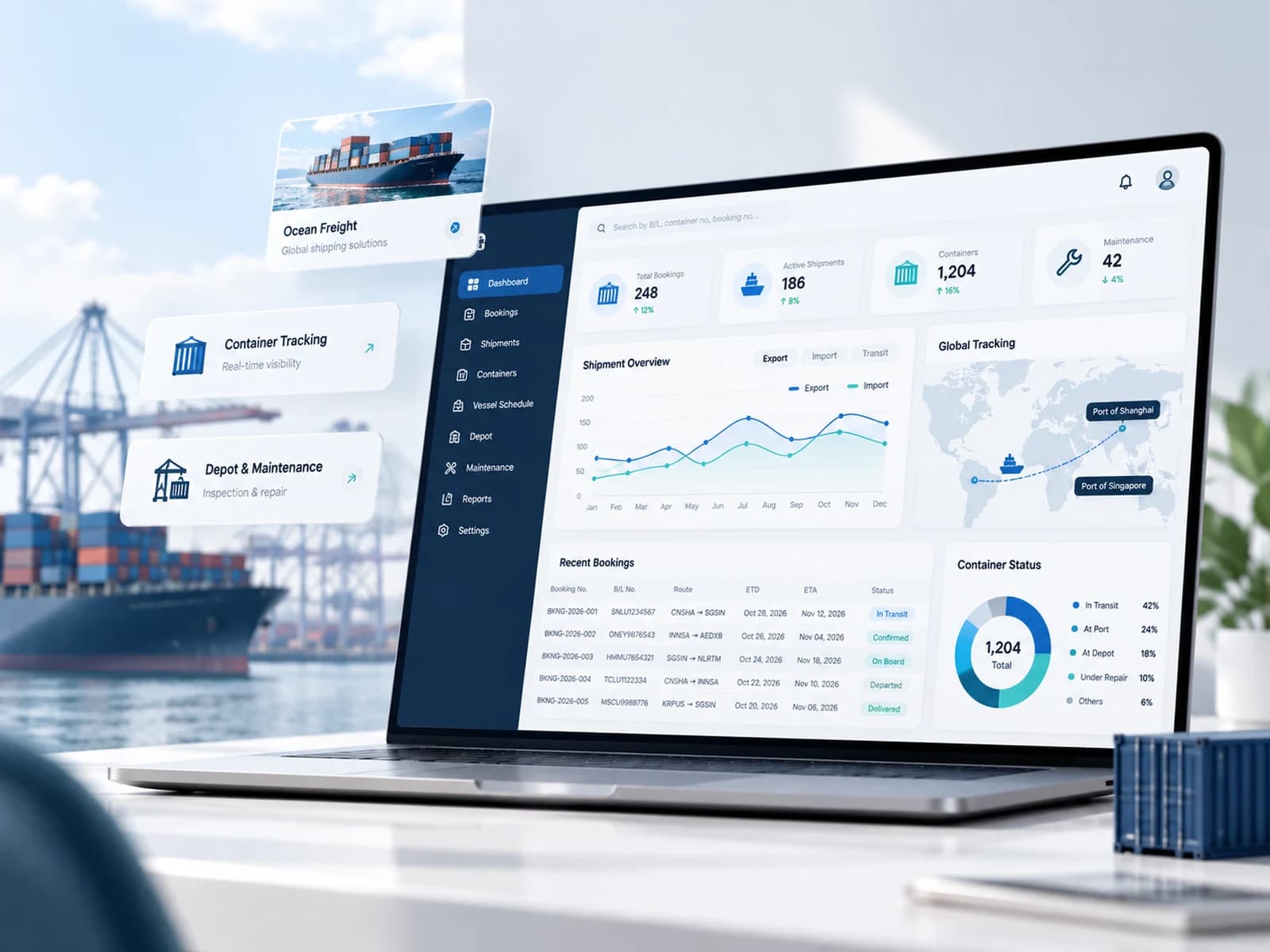
Modernizing global ocean freight operations with unified digital workflows.
International logistics demands real-time synchronization between freight forwarders, container depots, port terminals, and customs authorities. The NVOCC platform was designed to bridge disparate shipping workflows into one coherent, cloud-enabled web platform.
With centralized data access, historical audits, and container health records, the system increases operational turnaround, curtails detention charges, and ensures compliance with international maritime standards.
3
Core Dashboards
Export, Import, and Maintenance & Repair (M&R)
6solve
Client Contract
Contract via Chaavie Solutions
SVG
Icon Components
Modular React vector shipping & status icons
Grid
Responsive Tables
CSS Grid & Flexbox data-dense layouts
My Role & Technical Scope
End-to-end user interface development for enterprise maritime software.
Figma to Next.js Architecture
Translated complex maritime workflow specs into clean, modular Next.js and Tailwind CSS components across three core modules.
SVG & Asset Optimization
Converted complex shipping and status vector icons into lightweight React components, dramatically decreasing bundle size.
Cross-Device Responsiveness
Engineered responsive layouts adapting heavy data tables and filter bars seamlessly from wide monitors down to mobile viewports.
Three Core Shipping Modules
A comprehensive breakdown of the platform workflows engineered for ocean carriers.
Export Module
Outbound Container Logistics & Stuffing
Manages export-bound containers from booking allocation through optimal container sizing, type selection, and terminal stuffing verification.
- Real-time container allocation and tracking across depot stations
- Automated container size and payload optimization algorithms
- Complete export bill of lading and customs documentation management
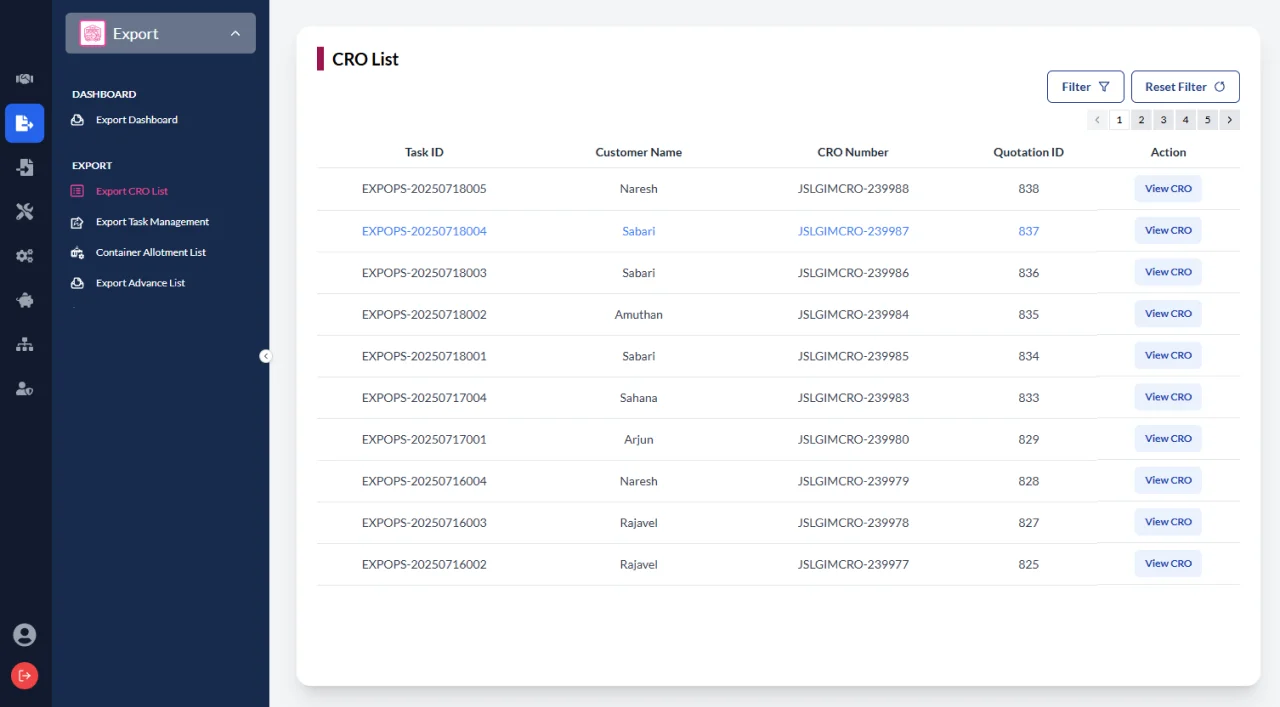
Export Booking & Allocation
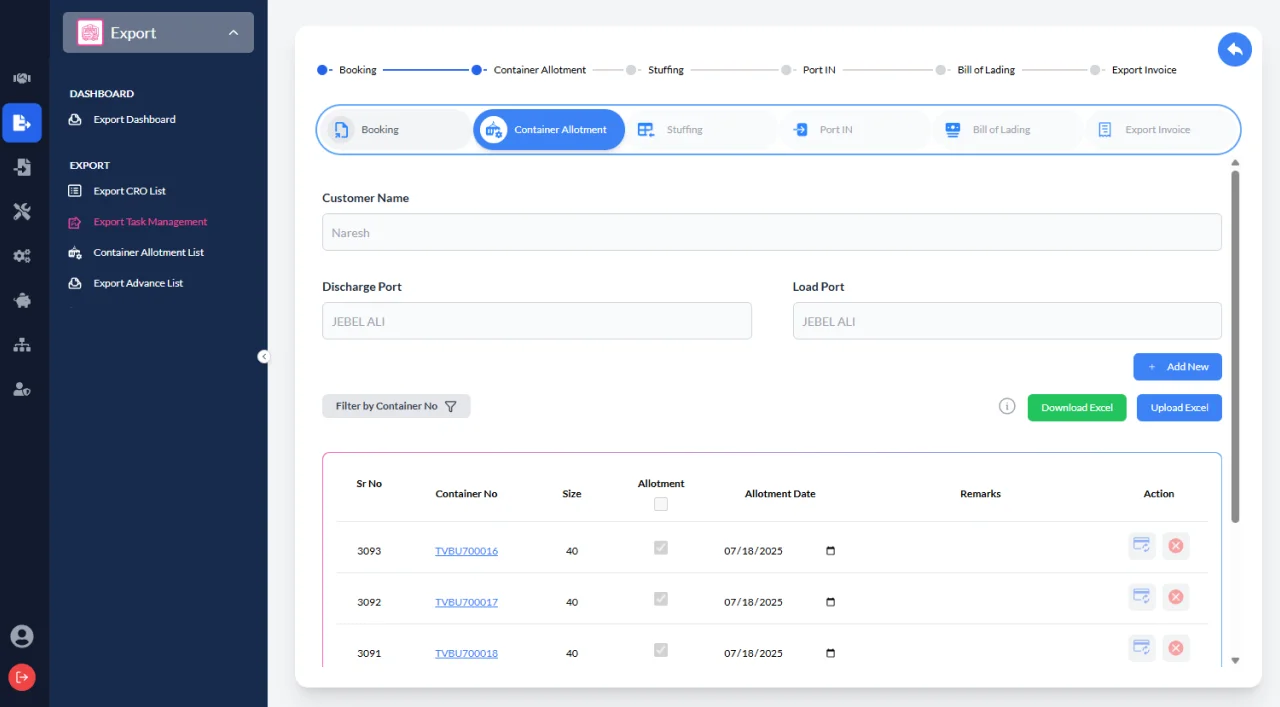
Container Manifest & Stuffing Verification
Import Module
Inbound Port Ingestion & Destuffing
Controls imported shipments arriving at sea terminals, coordinating container receipt, destuffing staging, cargo clearance, and routing empties.
- Vessel arrival manifest ingestion and terminal discharge logging
- Guided destuffing workflows with discrepancy and damage logging
- Automated empty container turn-in and dispatch routing
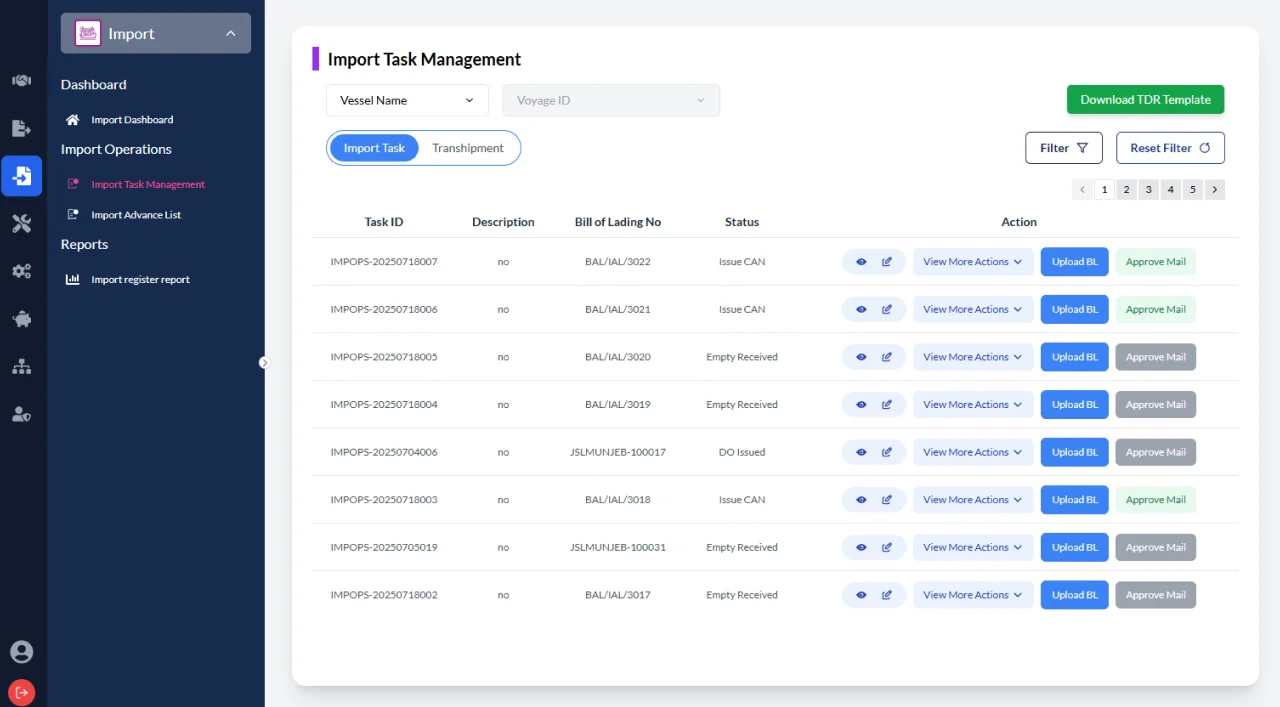
Terminal Discharge & Ingestion
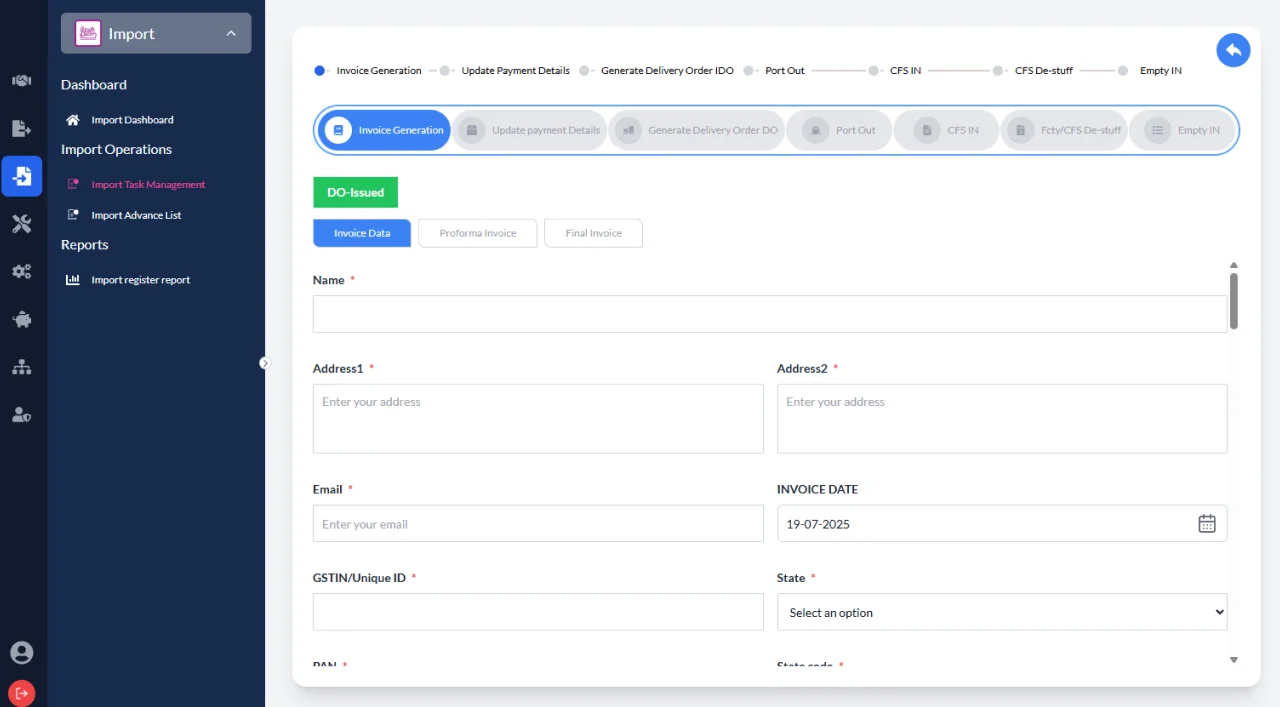
Destuffing & Empty Routing
Maintenance & Repair (M&R)
Container Fleet Health & Depot Inspections
Comprehensive life-cycle tracking of shipping containers. Records physical inspections, surveyor damage assessments, repair cost authorizations, and seaworthy certifications.
- Visual damage code mapping and severity grading
- Depot work order estimates and tariff-based invoicing
- Historical maintenance audits and sound condition certification
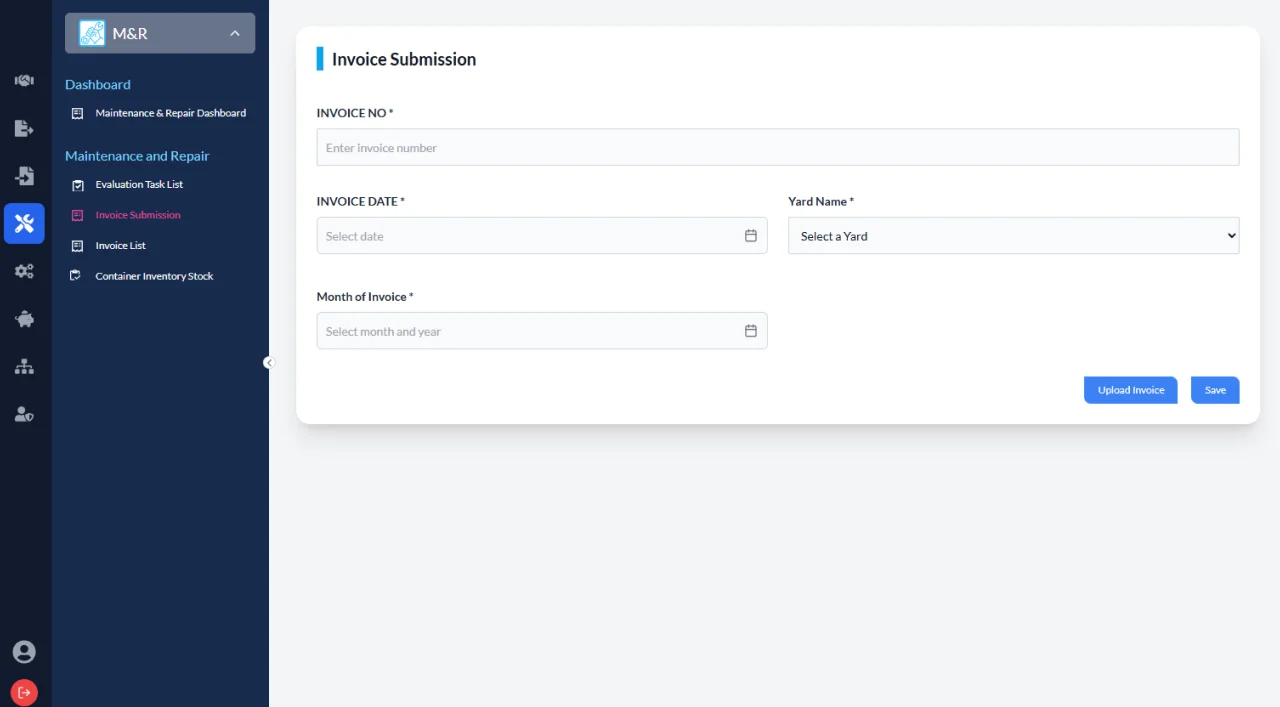
Depot Damage Assessment & Tariff Codes
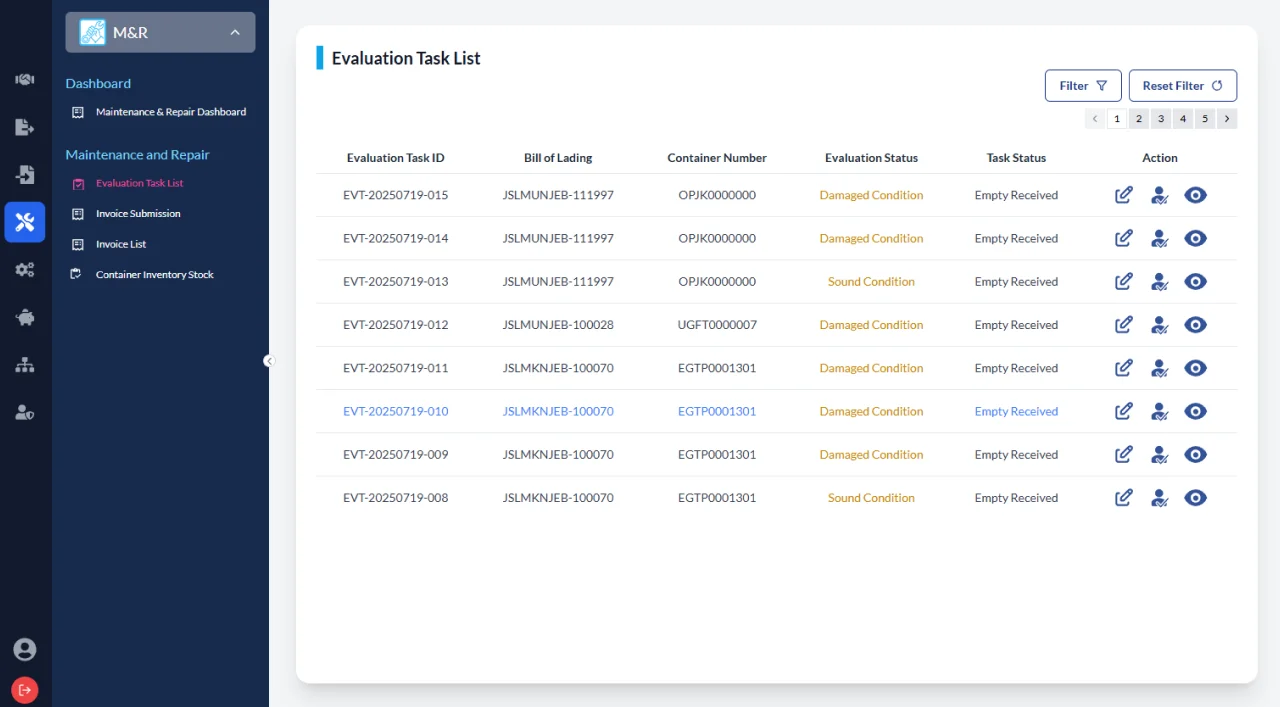
Repair Work Orders & Sound Condition Registry
Precision Implementation & Reusable Systems
Working across the Export, Import, and Maintenance & Repair modules, I translated Figma wireframes and design tokens into clean Next.js code using Tailwind CSS, CSS Grid, and Flexbox without compromising page performance.
To optimize application load times, all maritime SVG iconography and custom status tags were refactored into modular React components, minimizing render delays and ensuring consistency across shipping views.
Complex tabular interfaces containing container identifiers, detention dates, and multi-tier fee structures were built with strict accessibility standards and tested on viewports ranging from rugged depot tablets to ultra-wide operations room screens.
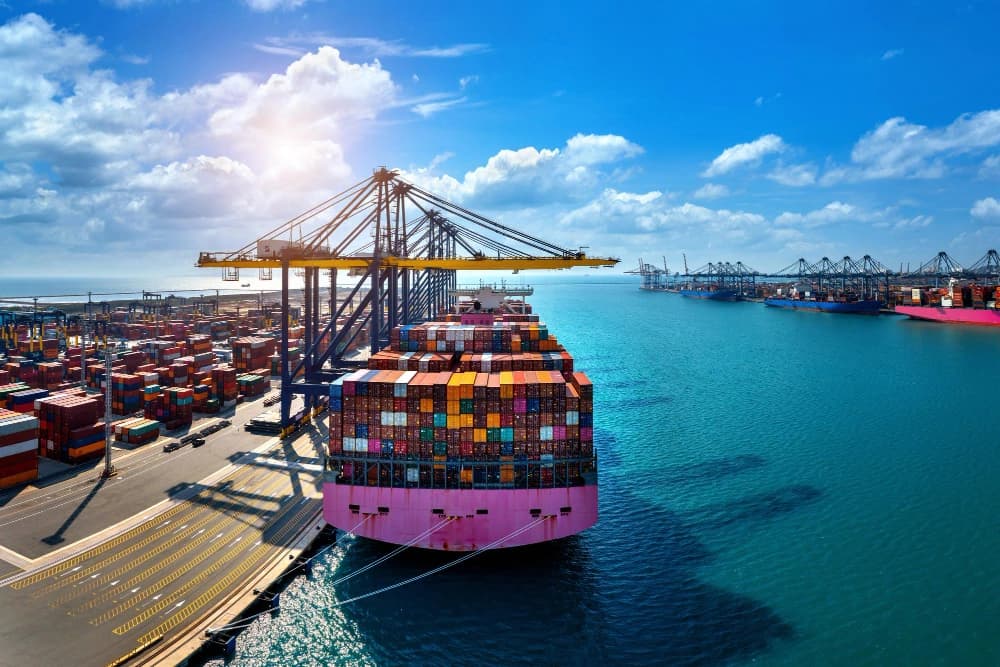
Global Freight Operations
Streamlined maritime workflows from ocean booking to empty depot turn-in.
What Was Built & Shipped
Frontend architecture delivered for 6solve IT Services under a contract via Chaavie Solutions.
3 Modules
End-to-End Logistics UI
Export, Import & Maintenance dashboards
Figma → UI
Design-Consistent Code
Built from Figma specs with Tailwind CSS
Grid & Flex
Data-Dense Layouts
Structured tables across desktop and tablet screens
Technology Stack
Modern frontend and backend stack powering high-scale maritime data operations.
Explore More Projects
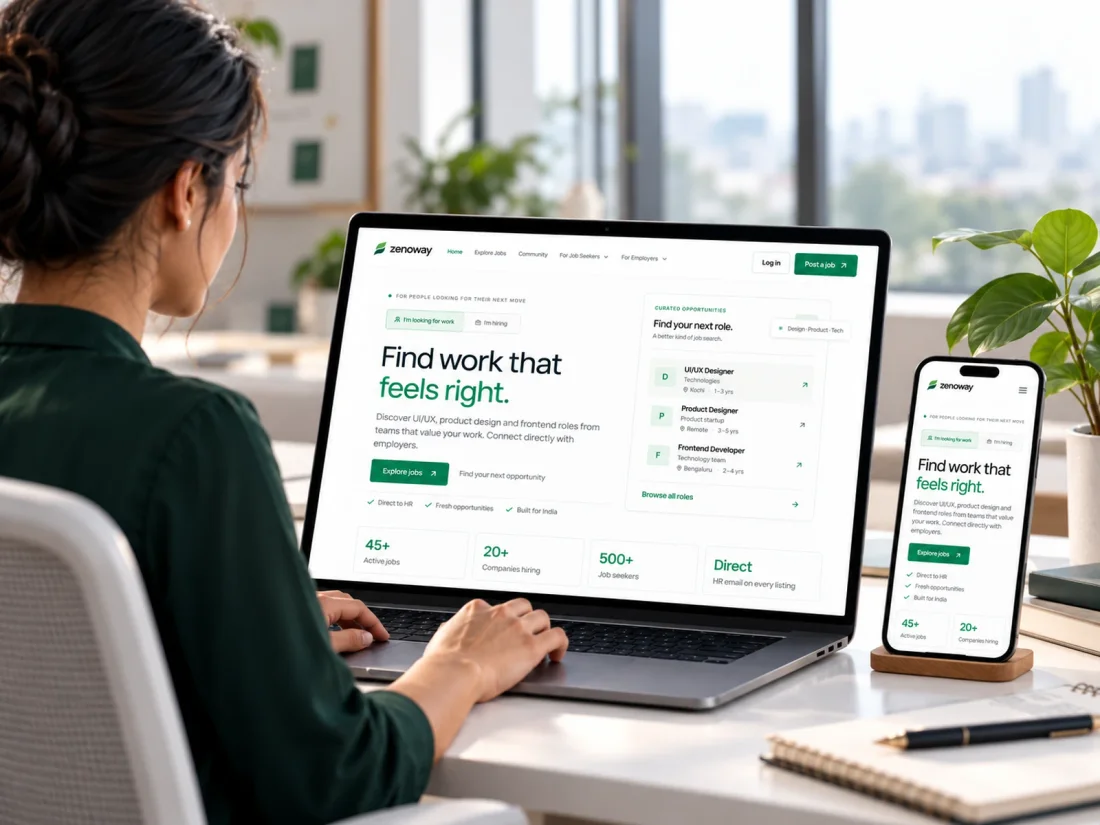
Zenoway
A career portal that skips accounts and application forms in favor of one action — a direct email to HR. Designed and built end to end, from job discovery through the admin dashboard.
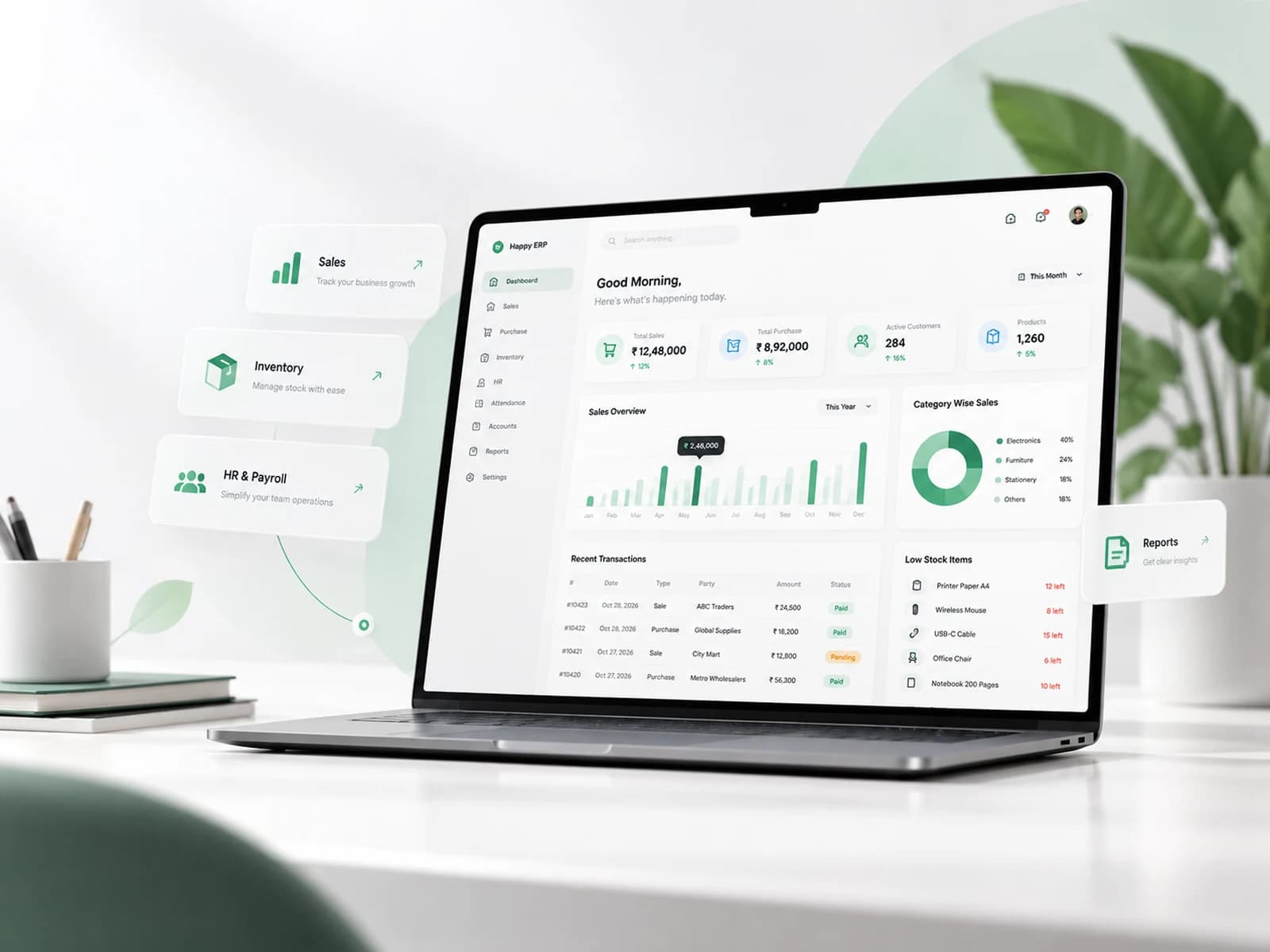
Happy ERP
Enterprise ERP system built to replace spreadsheet workflows with structured inventory tables, order flows, and real-time operational views.
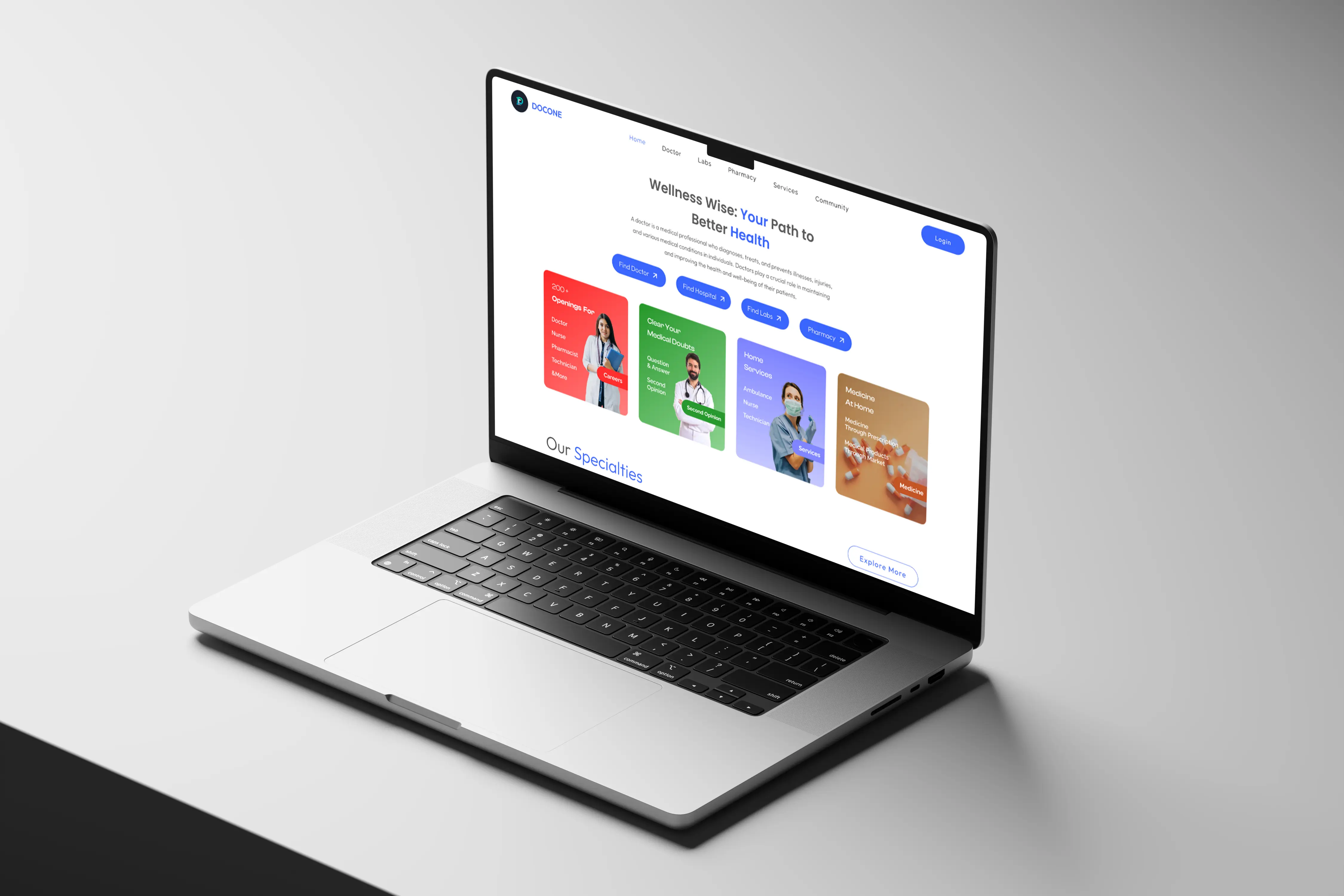
Doctor One
Healthcare consultation and clinic management platform designed for clear patient scheduling, prescription access, and mobile booking.